The TK Respiratory Load Differential (RLD)
Why acclimatisation is not a matter of “more effort”
Every successful high-altitude ascent is governed by a tension that most of the Kilimanjaro industry fails to acknowledge, let alone resolve.
On the one hand, controlled exertion at altitude is necessary.
It stimulates ventilatory adaptation, improves oxygen utilisation, and advances acclimatisation.
On the other hand, over-exertion in a hypoxic environment is not neutral.
It is physiologically expensive, stamina-depleting, and, beyond a threshold, actively harmful.
The error made by much of the industry is assuming that these two forces always point in the same direction. They do not.
At altitude, more effort does not linearly produce more adaptation.
Past a critical point, it produces delayed respiratory instability, poor sleep, cumulative fatigue, and ultimately reduced summit resilience.
The TK Respiratory Load Differential exists to manage this balance correctly.
The core problem the industry does not model
Most Kilimanjaro itineraries rely on a crude maxim:
“Climb high, sleep low.”
While directionally correct, this slogan conceals the true governing variable.
The body does not respond to altitude alone.
It responds to total respiratory load, which is determined by:
- Pace of movement
- External load carried
- Body mass relative to altitude
- Terrain efficiency
- Duration of exertion
- Psychological compliance with restraint
During daytime exertion, chemoreceptors disproportionately weight dissolved CO₂, often giving a misleading signal of respiratory adequacy.
At night, when respiratory drive is naturally depressed, the body “repays” this miscalculation.
This is why climbers who appear stable during the day can develop:
- Fragmented sleep
- Periodic breathing
- Cheyne–Stokes cycles
- Progressive exhaustion
The industry often misattributes these effects to “bad luck” or “individual weakness”.
They are neither.
They are predictable consequences of mismanaged respiratory load.
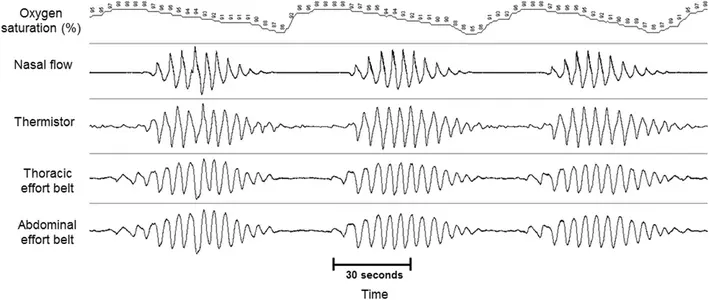
(Hernandez, Adam & Patil, Susheel 2016)
The TK Respiratory Load Differential (RLD): definition
The TK Respiratory Load Differential (RLD) is the vertical separation between:
- Maximum diurnal exertion altitude, and
- Sleep altitude
calibrated specifically to compensate for:
- Chemoreceptor lag during exertion, and
- Depressed nocturnal respiratory drive at altitude.
RLD is not a formula.
It is a bounded operating range applied dynamically by experienced guides under continuous oversight.
The RLD operating bands
1. The Optimal Band (Gold Standard)
- Approximate differential: ~200 metres
- Typical altitude zone: ~3,800–4,200 m
This band is routinely achievable when:
- Pacing is disciplined
- Clients carry minimal external load
- Body mass is proportionate
- Terrain is efficiently chosen
- Clients trust restraint over bravado
- Guides actively manage pace, rests, and hydration
In this band:
- Respiratory rhythm remains stable
- Sleep architecture is preserved
- Acclimatisation compounds rather than stalls
- Reserve is built, not spent
This is the condition Team Kilimanjaro aims for whenever terrain and group composition allow.
2. The Upper Safe Band (Outer limit, not a target)
- Approximate differential: 250–400 metres
This range is used only when necessary, for example:
- Mixed-ability groups
- Higher external load
- Less efficient terrain
- Logistical constraints imposed by the mountain
Even within this band, exertion must be tightly controlled.
Any extension beyond 400 metres ceases to be adaptive and becomes compensatory stress.
400 metres is an absolute outset, not an objective.
3. The Pathological Zone (Industry error)
- Differential: 600 metres and above
(for example, Lava Tower to Barranco Camp)
At this level, the drop is not restorative.
It is enervating.
Common consequences include:
- Delayed respiratory instability
- Cheyne–Stokes breathing cycles
- Poor sleep quality
- Cumulative stamina loss
- Reduced summit-day reserve
The industry frequently interprets this as “good acclimatisation”.
Physiologically, it is the opposite.
Why RLD cannot be reduced to a rule
A fixed numerical prescription would be dishonest.
RLD is modulated continuously by:
- Actual pace, not planned pace
- Carried load, not itinerary assumptions
- Client physiology and body composition
- Terrain inefficiency
- Weather exposure
- Psychological stress
Team Kilimanjaro guides calculate and adjust RLD instinctively, informed by:
- Daily reporting
- Direct observation
- Pattern recognition built over years
- Oversight that insists on accurate, unsentimental feedback
This is not guesswork.
It is applied physiology under consequence.
Codifying RLD does not replace judgment.
It explains why judgment works.
The Barranco paradox
One of the clearest illustrations of RLD mismanagement is what Team Kilimanjaro refers to as the Barranco Paradox.
The industry assumes that a very large descent after a high point is inherently beneficial.
In practice, such drops:
- Exceed the body’s capacity to stabilise respiratory rhythm
- Introduce unnecessary physiological shock
- Deplete rather than restore reserve
More sleep-low is not automatically better sleep-low.
The benefit exists only within a constrained differential.
Historical note
Team Kilimanjaro identified these dynamics through sustained on-mountain observation in the early 2000s and formalised them in route design by 2007, well before the current proliferation of generic acclimatisation advice.
The TK Respiratory Load Differential did not arise as a theory.
It arose as a correction to repeated, observable failure modes.
Why this matters
Kilimanjaro is not technically difficult.
It is physiologically unforgiving.
Most summit failures do not occur because climbers lack determination.
They occur because reserve was spent days earlier under the false belief that more exertion necessarily produces more adaptation.
RLD exists to prevent that error.
In summary
- Acclimatisation is governed by respiratory load, not altitude alone
- Exertion has a benefit ceiling in hypoxic environments
- Beyond that ceiling, it becomes harmful
- The TK Respiratory Load Differential defines where that boundary lies
- Optimal adaptation commonly occurs around 200 metres
- 400 metres is an absolute outer limit
- Anything beyond is not corrective, but pathological
This is the logic that underpins Team Kilimanjaro’s proprietary route geometry and guide discipline on Mount Kilimanjaro.
It is not a slogan.
It is a constraint.
Image credit: Hernandez, Adam & Patil, Susheel. (2016). Pathophysiology of central sleep apneas. Sleep And Breathing. 20. 10.1007/s11325-015-1290-z.

If you drive the same road every day for long enough, something subtle happens. You stop trusting the map and start trusting experience. You learn where traffic always builds, where the road surface deteriorates after rain, where a slight change of timing saves you frustration. The route on paper never changes, but the way you move through it does.

Choosing the best route to climb Mount Kilimanjaro is critical to your safety, summit success, and enjoyment. At Team Kilimanjaro, we draw on decades of experience to recommend the two routes that consistently offer the best acclimatisation profiles, the safest summit bids, and the most spectacular wilderness experiences: TK Lemosho and TK Rongai.
When planning your Kilimanjaro ascent in 2026 or 2027, one of the first questions is: how many days should you allocate?\nThe answer depends on your route, acclimatisation profile, and support level.\nWe closely analyse the timings for each of our route variants, compare standard vs extended schedules, and outline safe pacing strategies.\nAlso check our climbing cost breakdown and seasonal weather advice as you plan your itinerary.